Your pool deck is more than just a surface—it’s an investment that demands attention. Water, sunlight, and constant foot traffic can quickly deteriorate your deck’s appearance and structural integrity. Cracks, discoloration, and surface erosion aren’t just cosmetic issues; they’re warning signs that could compromise your entire outdoor space. Whether you’re facing minor wear or significant damage, understanding the right repair strategies can save you time, money, and potential headaches down the line. Want to know how to protect your pool deck’s future?
Understanding Pool Deck Damage Types
How often do you notice wear and tear on your pool deck? Common concrete discoloration and seasonal temperature effects can drastically influence your outdoor space’s appearance and structural integrity.
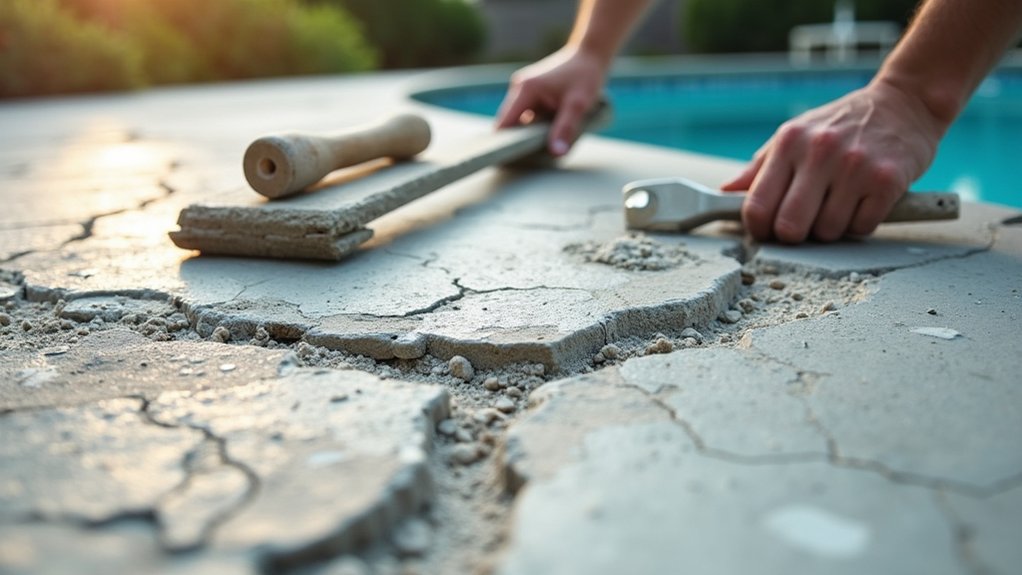
Cracks, chips, and surface erosion are typical damage types you’ll encounter, often resulting from water exposure, freeze-thaw cycles, and heavy foot traffic. Understanding these issues helps you address problems early, preventing more extensive and costly repairs.
Your pool deck’s condition reflects not just aesthetic concerns, but also potential safety risks. Foundation structural integrity can be compromised by similar environmental stressors that impact pool deck surfaces, similar to how foundation damage occurs in buildings. By recognizing different damage patterns, you’ll be better equipped to preserve a beautiful, functional outdoor area that boosts your property’s value.
Identifying Surface-Level Concrete Wear
Because concrete pool decks are constantly exposed to harsh environmental conditions, surface-level wear becomes an inevitable challenge for homeowners. You’ll notice this wear through distinct discoloration patterns and uneven surface textures that develop over time.
Cracks, fading, and slight roughening are common signs that your deck needs attention. Sunlight, pool chemicals, heavy foot traffic, and seasonal temperature changes contribute to these gradual deteriorations. When inspecting your pool deck, look closely at areas with the most exposure and movement.
Understanding these surface-level indicators helps you catch potential problems early and plan appropriate maintenance strategies. Brick repair techniques like tuckpointing can provide insights into how to address surface degradation and prevent further damage.
Addressing Structural Cracks and Shifts
When structural cracks appear in your pool deck, they often signal more serious underlying issues that require immediate attention. These warning signs could indicate:
- Foundation issues causing uneven settling
- Potential water drainage problems
- Structural stress from ground movement
- Inadequate initial concrete installation
You’ll want to assess the severity quickly, as ignoring these signs can lead to extensive and costly repairs. Professional inspection becomes essential when cracks exceed 1/4 inch width or show significant displacement.
Repair Methods for Different Deck Materials
Different pool deck materials require specialized repair approaches, ensuring long-lasting restoration and preventing future damage. Concrete decks often need professional resurfacing techniques that can match your desired material color options, while wood surfaces might demand complete board replacement or specialized sealing treatments.
Texture improvement techniques can help restore your deck’s appearance and structural integrity, whether you’re dealing with stamped concrete, natural stone, or composite materials. By understanding each material’s unique repair requirements, you’ll protect your investment and maintain a beautiful, safe pool area that reflects your personal style and boosts your outdoor living space.
Cost Considerations and Budgeting
Traversing pool deck repair costs can feel formidable, but smart planning helps you manage your budget effectively. Consider these key financial aspects when preparing for your deck renovation:
- Get multiple quotes from reputable contractors
- Examine financing options for larger repair projects
- Create a realistic budgeting timeline
- Factor in potential unexpected repair expenses
Understanding your financial constraints and researching cost-effective solutions will help you navigate deck repairs with confidence. While repairs might seem challenging, strategic planning and careful research can alter a potentially stressful situation into a manageable home improvement project. Your proactive approach guarantees a smoother, more affordable deck restoration experience.
DIY vs. Professional Deck Repair
After carefully mapping out your budget, you’ll want to decide whether pool deck repairs are a DIY project or require professional knowledge. Some repairs like small crack filling might save you on DIY labor costs, but complex issues demand expert skills.
Professional certification requirements guarantee technicians understand structural integrity and safety standards. While you might feel confident handling minor cosmetic fixes, significant structural damage needs specialized training.
Weigh your comfort level, technical skills, and potential long-term consequences before choosing between DIY and professional repair approaches.
Preventative Maintenance Strategies
Because pool deck maintenance can prevent costly repairs, homeowners should adopt proactive strategies to protect their outdoor surfaces. Regular inspections are your first line of defense against potential damage. By catching issues early, you’ll save time and money in the long run.
Key preventative maintenance strategies include:
- Seal your deck every 2-3 years
- Clean surfaces monthly to prevent dirt buildup
- Address discoloration immediately
- Check for cracks and repair promptly
These steps will help you maintain a beautiful, durable pool deck that bolsters your outdoor living space and safeguards your investment.
Long-Term Pool Deck Care and Preservation
How can you guarantee your pool deck remains in peak condition for years to come? Long-lasting sealant application is your first line of defense against wear and deterioration. By investing in quality sealants and applying them regularly, you’ll protect your deck from moisture, UV damage, and cracking.
Periodic pressure washing helps remove dirt, algae, and potential staining agents that can compromise your deck’s integrity. You’ll want to schedule these maintenance tasks annually, ensuring your pool deck stays beautiful and structurally sound. With consistent care, you can extend your deck’s lifespan and maintain its original appearance.
Frequently Asked Questions
How Long Does a Typical Pool Deck Repair Usually Take?
You’ll find most pool deck repairs take 2-5 days, depending on damage extent. Your anticipated timeline and repair scheduling will vary based on specific repair needs and contractor availability.
Will My Homeowner’s Insurance Cover Pool Deck Damage?
Your homeowner’s insurance might cover pool deck damage, but it’ll depend on your policy’s deductible amount and coverage limits. Check with your insurer to understand your specific protection.
Can Pool Deck Repairs Be Done During Winter Months?
You’ll face challenges repairing pool decks during winter due to seasonal weather conditions. Potential cost considerations and material limitations might make postponing repairs until warmer months more practical and cost-effective.
Do Pool Deck Repairs Require Me to Drain My Pool?
Depending on the repair’s scope and seasonal weather patterns, you’ll likely need to partially drain your pool to maintain structural integrity. The extent of draining depends on the specific deck damage and repair technique.
How Often Should I Plan for Potential Pool Deck Repairs?
You’ll want to inspect your pool deck annually and plan repairs every 3-5 years. Stay proactive with seasonal maintenance schedules to catch potential issues early and keep your outdoor space looking great.