Are you tired of basement flooring that deteriorates quickly and demands constant repairs? Concrete floors have emerged as a game-changing solution for homeowners seeking longevity and style. These sturdy surfaces offer unparalleled performance, altering your basement from a neglected space into a functional, attractive area. By choosing concrete, you’ll invest in a flooring option that can withstand moisture, heavy traffic, and time itself. Curious about how concrete can overhaul your basement?
Unmatched Durability and Longevity
Concrete floors in basements stand out for their outstanding durability, often lasting 50 years or more with minimal maintenance. You’ll appreciate how these floors can withstand heavy foot traffic, resist moisture, and maintain their structural integrity without constant repairs. Tuckpointing techniques used in masonry maintenance demonstrate similar principles of protecting structural integrity and preventing moisture damage.
Their easy installation means you won’t face lengthy, disruptive renovation processes. Whether you’re looking to create a functional storage space or a comfortable living area, concrete floors provide a reliable foundation that accommodates your changing needs. You’ll save time and money with this long-lasting flooring solution.
Cost-Effective Flooring Solution
When you’re searching for an affordable basement flooring option, few solutions can match the economic advantages of concrete floors. You’ll find that low installation costs make concrete an attractive choice for budget-conscious homeowners.
Unlike other flooring materials that require frequent replacement, concrete offers long term savings through minimal maintenance and exceptional durability. Its resilience means you won’t be spending money on repairs or renewals every few years. Foundation repair costs can be significantly reduced by choosing a durable concrete floor that withstands potential structural challenges in basement environments.
Moisture and Water Resistance
Because basements are prone to moisture issues, homeowners often worry about potential water damage to their flooring. Concrete floors offer superior humidity control and exceptional waterproofing properties that can protect your living space.
Unlike traditional materials, concrete naturally resists moisture penetration and prevents mold growth, which means you’ll have a more durable and reliable basement surface. When professionally sealed, these floors create an impenetrable barrier against water seepage, giving you peace of mind during heavy rains or potential flooding scenarios. Your basement can remain dry and protected.
Design Versatility and Aesthetic Options
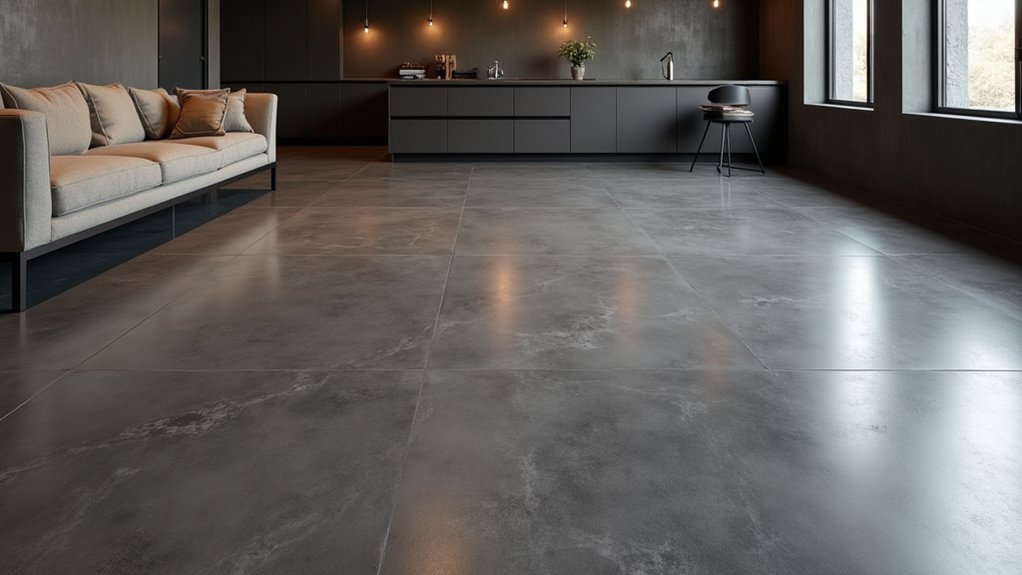
If you’re concerned that concrete floors might appear dull or industrial, you’ll be pleasantly surprised by the incredible design versatility available today. Modern design aesthetics have adapted concrete into a stylish basement flooring option with customizable finishes that can match any home’s decor.
You can choose from stained, polished, stamped, or textured surfaces that mimic natural stone, wood, or unique artistic patterns. Whether you want a sleek, minimalist look or a warm, inviting atmosphere, concrete floors can be personalized to reflect your personal style and create a space that feels distinctly yours.
Easy Maintenance and Cleaning
Despite common misconceptions about concrete maintenance, basement concrete floors actually offer remarkably straightforward cleaning and upkeep. You’ll appreciate how simple it’s to maintain these surfaces with regular sweeping and occasional mopping.
The simplified installation means fewer seams and joints where dirt can accumulate, giving you a consistent appearance that stays clean with minimal effort.
Your concrete floor can handle spills, mud, and everyday wear without showing significant damage. Just use a pH-neutral cleaner and a soft mop to keep your basement floor looking pristine and welcoming.
Enhanced Thermal Performance
Concrete’s exceptional thermal mass properties make it an excellent choice for basement flooring, offering more than just durability and easy maintenance. You’ll appreciate how concrete helps regulate indoor temperatures, storing heat during warm days and releasing it slowly when it gets cooler.
This natural temperature regulation means you’ll enjoy improved energy efficiency throughout your home. By absorbing and storing thermal energy, concrete floors help stabilize your basement’s climate, reducing heating and cooling costs. It’s a smart solution that keeps your space comfortable while potentially lowering your energy bills.
Eco-Friendly Flooring Choice
When you’re looking for an environmentally responsible flooring option, concrete emerges as a standout choice for basement installations. It’s a sustainable material that considerably reduces your home’s carbon footprint while providing durability and aesthetic appeal.
Made from locally sourced, natural materials
Requires minimal processing compared to other flooring
Extremely long-lasting, reducing replacement frequency
Can incorporate recycled content during manufacturing
Increased Home Value and Appeal
Investing in a concrete basement floor can drastically increase your home’s market value and visual appeal. Modern homebuyers appreciate durable, low-maintenance surfaces that look sleek and professional. Your concrete floor becomes an attractive selling point, potentially enhancing property valuation and improving home resale prospects.
Potential buyers will notice the smooth, contemporary finish that signals careful home maintenance. Unlike other flooring options, concrete offers a clean, adjustable aesthetic that suits multiple design styles. By choosing concrete, you’re making a smart investment that can set your home apart in a competitive real estate market.
Frequently Asked Questions
Are Concrete Basement Floors Cold and Uncomfortable to Walk On?
You’ll find concrete floors chilly, but with proper insulation options and moisture management, they can be cozy, warm, and comfortable underfoot in your inviting basement space.
How Long Does It Take to Install a Concrete Basement Floor?
You’ll typically spend 3-5 days on concrete floor preparation and installation. The process includes site leveling, reinforcement placement, concrete pouring, and curing, which can vary based on your basement’s specific requirements.
Can Concrete Floors Be Damaged by Heavy Furniture or Equipment?
You’ll need to be cautious with heavy objects, as excessive weight can cause cracks or surface damage. Place protective pads under furniture and distribute weight evenly to maintain your concrete floor’s integrity.
Do Concrete Floors Require Special Tools or Skills to Maintain?
You’ll find concrete floors are surprisingly low-maintenance, requiring simple tools like a mop and basic cleaning supplies. Their long-lasting durability means minimal effort keeps them looking pristine with easy cleaning requirements.
Will Concrete Floors Increase or Decrease My Home’s Resale Value?
You’ll likely enhance your home’s resale value with concrete floors, as their increased durability and lower maintenance costs appeal to potential buyers seeking a practical, long-lasting flooring solution.