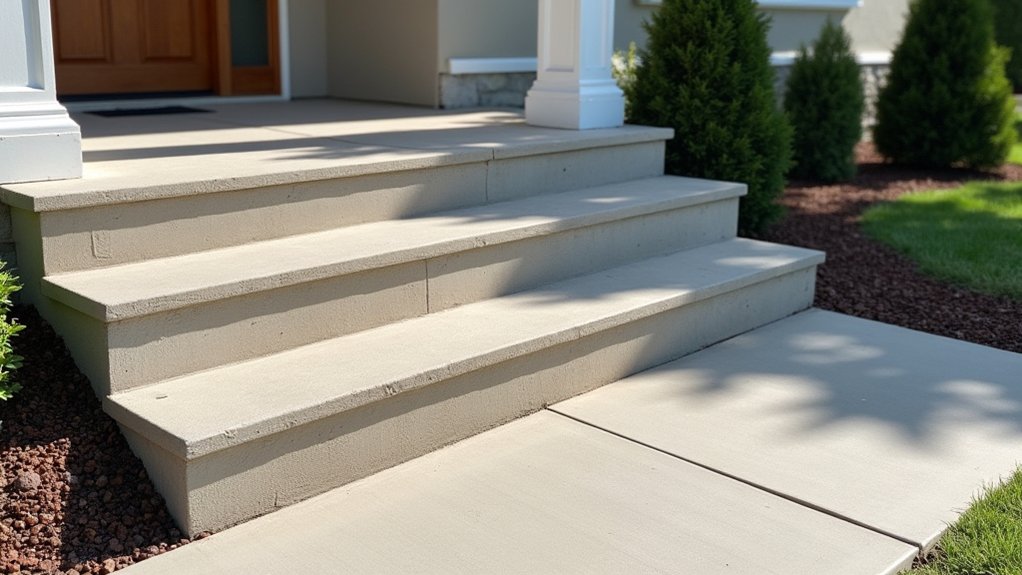
Your home’s front porch steps aren’t just an entryway—they’re a critical safety feature that can protect your family from accidents. Crumbling, uneven, or poorly designed concrete steps can become hazardous, creating risks with every approach. Whether you’re planning a renovation or building from scratch, understanding how to create safe, durable concrete steps isn’t just smart—it’s essential. Curious about altering your front entrance into a secure, welcoming pathway?
Understanding Concrete Step Structural Basics
How do you guarantee your concrete steps are more than just a walkway? Structural integrity begins with understanding concrete strength requirements and performing a thorough structural load analysis.
Your front porch steps aren’t just decorative; they’re a critical structural component that must safely support family, guests, and daily traffic. By carefully calculating weight distribution, reinforcement needs, and material quality, you’ll create steps that aren’t just beautiful, but dependable.
Proper planning ascertains your concrete steps will remain sturdy, safe, and reliable for years to come, giving you peace of mind with every step. Foundation repair experts recommend addressing potential structural issues early to prevent costly long-term damage.
Key Safety Design Considerations
Building on the structural foundations we’ve just investigated, safety design becomes the cornerstone of creating reliable concrete steps.
You’ll want to prioritize visibility requirements that help prevent accidents, especially during low-light conditions. Consider step height, width, and color contrast to augment pedestrian flow and minimize tripping risks.
Well-designed steps aren’t just functional—they’re an invitation to feel secure and welcome. Thoughtful placement of lighting, handrails, and textured surfaces can dramatically improve safety, altering your front porch into a welcoming, accessible entryway that speaks to both form and function. Tuckpointing techniques can also help reinforce the structural integrity of surrounding masonry, ensuring long-term stability and safety of your entryway.
Planning Your Concrete Step Project
Before diving into your concrete step project, you’ll want to carefully assess several important planning elements that will secure a successful outcome. Proper planning guarantees your front porch steps will be both functional and aesthetically pleasing.
Your project checklist should include:
- Verify local building code requirements
- Measure precise entrance dimensions
- Evaluate architectural design considerations
- Select appropriate materials and reinforcement
- Determine necessary drainage solutions
Material Selection and Quality Factors
After carefully planning your concrete step project, selecting high-quality materials becomes the next pivotal consideration for ensuring long-lasting, durable front porch stairs. You’ll want to focus on a durable aggregate mixture that can withstand heavy foot traffic and harsh weather conditions.
Weather-resistant admixtures are essential for preventing cracking and deterioration. Choose materials that complement your home’s exterior and provide the strength needed for safe, reliable steps. Your selection will directly impact the longevity and appearance of your new concrete stairs, so invest carefully in top-quality components that’ll serve you well for years to come.
Professional Installation Versus DIY Approaches
Anyone contemplating concrete step installation faces a critical decision: whether to tackle the project personally or hire professional contractors. Consider these key factors:
- Contractor proficiency secures precision and structural integrity
- DIY approaches can save money but risk costly mistakes
- Professional installation guarantees proper material sourcing
- Complex projects demand specialized skills and equipment
- Skill level and project complexity determine best approach
While DIY might seem appealing, professional contractors bring years of experience and technical knowledge. They comprehend drainage, reinforcement, and structural requirements that can prevent future issues. Your front porch’s safety and durability depend on expert installation, making professional services a wise investment for long-term peace of mind.
Non-Slip Surface Treatments and Techniques
Since concrete steps can become treacherous when wet, implementing non-slip surface treatments is crucial for preventing accidents and guaranteeing secure access to your front porch. You’ll want to focus on traction improvement techniques like adding textured concrete sealers, applying non-slip aggregates, or installing anti-slip strips. These methods enhance slip resistance enhancement by creating rougher surfaces that provide better grip.
Professional installers can apply specialized coatings that blend seamlessly with your existing concrete, ensuring both safety and aesthetic appeal. By choosing the appropriate treatment, you’ll create steps that look great and keep your family protected from potential slips and falls.
Maintenance and Long-Term Care Strategies
When concrete steps begin to show signs of wear, proactive maintenance becomes your best defense against costly repairs and potential safety hazards.
Your concrete step maintenance strategy should include:
- Annual concrete step inspection for cracks and surface damage
- Regular cleaning with appropriate concrete-safe solutions
- Prompt repair of minor surface imperfections
- Resealing surfaces every 2-3 years
- Monitoring drainage patterns around step foundations
Preventative maintenance isn’t just about preserving appearance—it’s about ensuring your front porch remains safe and welcoming. By investing a little time and effort, you’ll protect your concrete steps and maintain their structural integrity, preventing more expensive repairs down the road.
Cost Breakdown and Value Considerations
Custom concrete steps represent a significant home improvement investment that deserves careful financial analysis. You’ll want to balance your budget management with return on investment while considering long-term durability.
Professional installation typically ranges from $1,500 to $5,000, depending on design complexity and local labor rates. Quality materials and expert craftsmanship can increase your home’s value and prevent costly future repairs.
While the upfront expense might seem substantial, well-constructed concrete steps can last decades, offering excellent value. Your investment protects both your property’s aesthetic appeal and structural integrity, making it a wise home improvement choice.
Frequently Asked Questions
How Long Do Custom Concrete Steps Typically Last Before Needing Replacement?
You’ll find custom concrete steps can last 25-50 years when you maintain their structural integrity through regular inspections and address repair needs promptly, ensuring a welcoming and safe entrance.
Can Concrete Steps Be Customized to Match My Home’s Architectural Style?
You’ll love how concrete steps can reflect your home’s unique design features, allowing customization that augments architectural style while providing low maintenance requirements that seamlessly complement your personal aesthetic.
Will Concrete Steps Increase My Property’s Overall Resale Value?
Well-designed concrete steps can elevate your property’s curb appeal factors and potentially increase property value by creating an inviting entrance that appeals to potential buyers and amplifies your home’s overall aesthetic appeal.
Are Concrete Steps Better Than Traditional Wooden or Brick Entry Steps?
You’ll find concrete steps outshine wooden or brick options with their slip-resistant surface and clean aesthetic appeal, giving your home a modern, cohesive look that neighbors will admire.
How Do Weather Conditions Impact the Durability of Custom Concrete Steps?
You’ll need expansion joints to combat freeze-thaw cycles, which can crack concrete. By strategically designing your steps, you’ll create resilient pathways that withstand harsh weather and maintain their strength.