Your pool deck’s safety isn’t just about aesthetics—it’s about preventing potentially serious accidents. Smooth concrete can become a dangerous surface when wet, turning your backyard oasis into a potential hazard zone. Understanding how to improve traction and manage moisture could mean the difference between a fun day by the pool and an unexpected trip to the emergency room. Curious about protecting your family and guests from slip risks?
Understanding the Risks of Slippery Pool Decks
When water splashes onto concrete pool decks, the surface can quickly become dangerously slick and treacherous. Environmental factors like moisture, sunlight, and temperature changes can dramatically increase slip risks around swimming areas. Your pedestrian traffic further compounds these hazards, as wet feet, sunscreen residue, and pool chemicals create unpredictable surface conditions. Each step you take could potentially lead to a dangerous slip or fall, threatening your safety and enjoyment. Brick repair techniques like tuckpointing can help improve surface texture and prevent moisture penetration, offering additional safety insights for maintaining slip-resistant areas.
Concrete Surface Texture and Slip Resistance
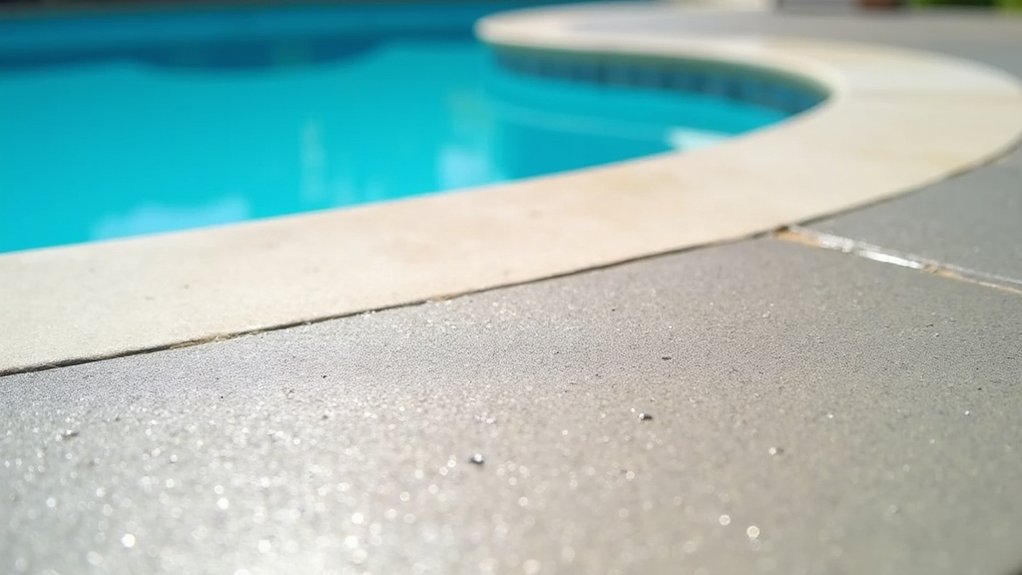
Because concrete pool decks aren’t inherently slip-resistant, surface texture plays a critical role in preventing accidents and ensuring safety. You’ll want to understand how surface roughness directly impacts the coefficient of friction, which determines how slippery your deck will be. Smooth concrete increases fall risks, while textured surfaces provide better grip and traction. Professional concrete treatments can improve your deck’s slip resistance by creating microscopic grooves and patterns that help feet maintain contact. By investing in proper surface preparation, you’ll create a safer environment where everyone can enjoy poolside activities without worrying about dangerous slips. Similar to masonry joint maintenance, protecting surface integrity is crucial for preventing potential safety hazards.
Professional Concrete Coating Solutions
Although concrete pool decks can be slippery and challenging, professional concrete coating solutions offer thorough protection and heightened safety for your outdoor space. Epoxy coating applications provide a durable, slip-resistant surface that alters your deck’s functionality and appearance.
Decorative concrete overlays not only bolster safety but also add aesthetic value, giving you a stylish and secure pool area. By investing in these professional solutions, you’ll create a space that’s both visually appealing and safe for family and friends to enjoy, reducing the risk of accidents and providing peace of mind.
DIY Treatments for Enhanced Traction
If you’re looking to improve your concrete pool deck’s safety without breaking the bank, several DIY treatments can enhance traction and reduce slip risks.
Consider these effective solutions for enhancing your deck’s slip resistance:
- Apply textured overlays that create a rougher surface
- Use non-slip concrete sealers with gritty additives
- Install anti-slip mats in high-traffic pool areas
- Employ concrete etching techniques for increased grip
These slip resistant treatments aren’t just practical—they’re affordable and easy to implement. You’ll protect your family while maintaining your deck’s aesthetic appeal, giving you peace of mind during those fun summer pool days.
Regular Maintenance and Cleaning Techniques
When concrete pool decks accumulate dirt, grime, and algae, they can quickly become hazardous and unsightly. You’ll want to establish a regular maintenance routine to keep your deck safe and attractive.
Carry out seasonal cleanings at least twice a year, using a pressure washer or stiff-bristled brush with mild detergent. Routine inspections are vital—check for cracks, uneven surfaces, or signs of wear that could compromise slip resistance.
Non-Slip Additives and Sealants
Beyond routine cleaning, protecting your concrete pool deck requires strategic solutions that improve safety and durability.
Enhance your pool deck’s slip resistance with these key strategies:
- Apply epoxy based sealants for long-lasting protection
- Incorporate aggregate additives to increase surface traction
- Choose professionally-formulated non-slip treatments
- Regularly inspect and reapply protective coatings
Non-slip additives create a textured surface that considerably reduces accident risks. By investing in quality sealants, you’ll not only improve safety but also extend your deck’s lifespan. These treatments help prevent water absorption, minimize cracking, and maintain a clean, professional appearance that’ll make your outdoor space both beautiful and secure.
Drainage and Water Management Strategies
Effective drainage plays an essential role in maintaining a safe and enduring concrete pool deck. You’ll want to design proper drainage patterns that direct water runoff away from your deck and pool area. Good drainage prevents water accumulation, which can lead to slippery surfaces and potential accidents.
Comparative Safety Approaches for Pool Deck Design
Because pool deck safety involves multiple design considerations, homeowners and contractors must compare different approaches to minimize risks efficiently. Your secure pool area design relies on strategic choices that prioritize your family’s well-being.
Consider these critical safety elements:
- Slip resistance testing for surface materials
- Non-slip texture and surface treatments
- Proper slope for water drainage
- Strategic placement of safety features
You’ll want to evaluate multiple design strategies that reduce potential accidents. By understanding comparative approaches, you can create a pool deck that looks great and keeps everyone protected. Your thoughtful selection guarantees a safer swimming environment.
Frequently Asked Questions
How Much Does a Slip-Resistant Concrete Pool Deck Treatment Cost?
You’ll spend $2-$6 per square foot on slip-resistant treatments, with total costs varying based on deck size, complexity, and chosen method. Budget considerations include surface preparation and professional application.
Can I Make My Existing Pool Deck Slip-Resistant Without Replacing It?
You can easily improve your existing pool deck’s safety using temporary surface overlays and anti-slip sealers without complete replacement, creating a secure space where friends and family can enjoy poolside fun worry-free.
Are Slip-Resistant Concrete Coatings Safe for Children and Pets?
You’ll want slip-resistant coatings that prioritize safety precautions. Most modern treatments are non-toxic, child-friendly, and pet-safe when applied correctly, following manufacturer care requirements and allowing proper drying time.
How Long Do Non-Slip Treatments Typically Last Before Needing Reapplication?
You’ll find most non-slip treatments last 2-3 years, depending on foot traffic and weather exposure. Regular maintenance and choosing quality products can extend your deck’s slip-resistant protection.
Will Slip-Resistant Treatments Change the Appearance of My Concrete Pool Deck?
Most slip-resistant treatments won’t dramatically alter your deck’s texture appearance. You’ll maintain your aesthetic while enhancing safety, with subtle surface modifications that blend seamlessly into your pool area’s design.