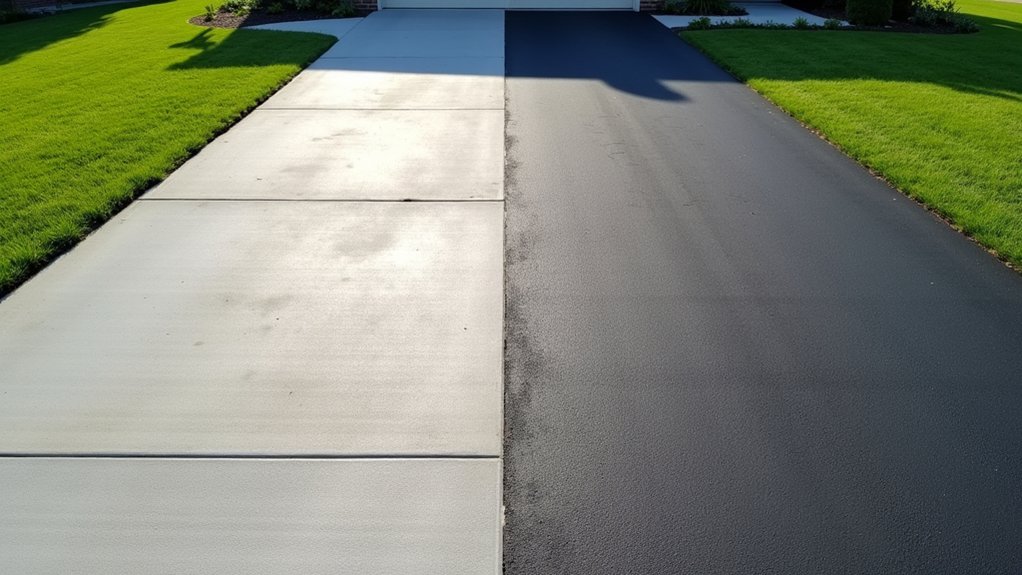
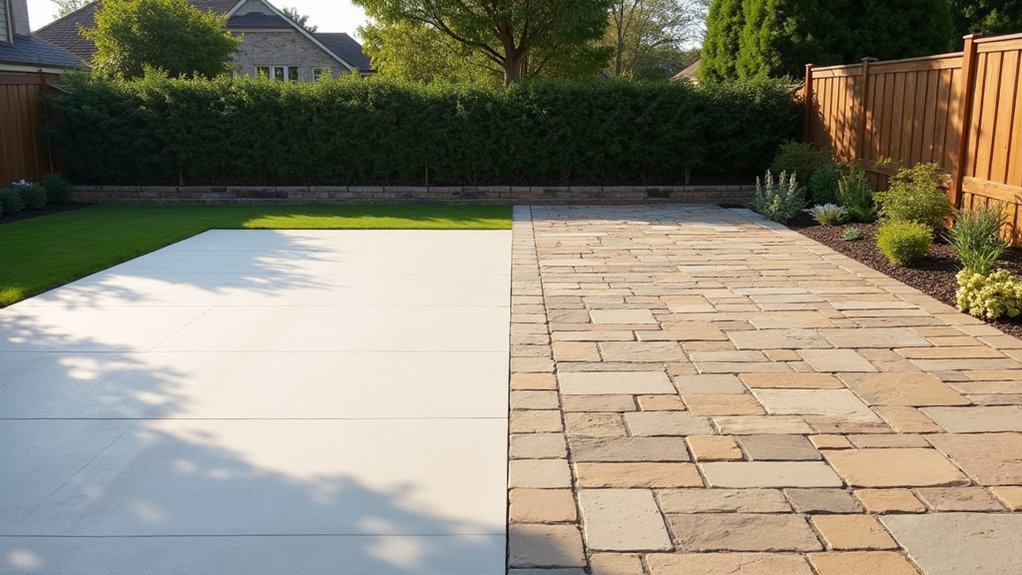
When you’re planning an outdoor living space, choosing between concrete patios and pavers can feel overwhelming. Your decision impacts aesthetics, budget, and long-term satisfaction. Each option offers unique benefits that’ll alter your backyard, but they’re not created equal. Are you looking for durability, design flexibility, or cost-effectiveness? Understanding the key differences will help you make an informed choice that suits your specific needs and vision.
Cost Comparison
When comparing patio materials, most homeowners find cost to be a critical deciding factor. Concrete patios typically offer better budget flexibility, costing between $6 to $10 per square foot, while pavers can range from $10 to $20 per square foot. You’ll notice that concrete provides more cost-effective options for larger outdoor spaces. Masonry maintenance techniques like tuckpointing can help preserve the longevity of outdoor structures and protect your investment in patio materials. Installation expenses also differ, with concrete being cheaper to install. However, long-term maintenance costs can vary. Pavers might require periodic resetting, while concrete might need occasional sealing. Your choice depends on balancing upfront expenses with future maintenance investments.
Installation Complexity
Though concrete patios and pavers might seem straightforward to install, the complexity varies markedly between these two materials. You’ll find that concrete patios require less labor-intensive construction, with simpler site preparation requirements. Pouring concrete involves creating a level base, setting forms, and smoothing the surface, which can typically be completed in a day or two. Paver installation, however, demands more detailed work: you’ll need to excavate, create precise gravel and sand layers, carefully place each paver, and guarantee perfect alignment and drainage. Masonry experts in Pittsburgh recommend understanding the intricacies of installation to ensure long-lasting outdoor surfaces.
Design and Aesthetic Versatility
After carefully preparing your outdoor space, you’ll find that design flexibility becomes a key consideration in choosing between concrete patios and pavers. Pavers offer superior customizability options, allowing you to create unique patterns and color combinations that reflect your individualized style.
Concrete patios can be stamped or stained, but they’re more limited in creative design possibilities. You’ll appreciate how pavers let you mix shapes, sizes, and colors, giving your outdoor area a truly tailored look. Whether you want a rustic or modern feel, pavers provide the versatility to bring your vision to life.
Durability and Longevity
Durability stands as a critical factor when deciding between concrete patios and pavers for your outdoor living space. Weather resistance and structural integrity play key roles in your long-term satisfaction and investment.
Concrete patios offer solid, uniform surfaces that can withstand heavy foot traffic. Pavers provide flexibility and easier repair options if individual stones become damaged. Both materials can last 25-30 years with proper maintenance. Climate conditions considerably impact each material’s performance and longevity.
When you’re planning your perfect outdoor area, understanding these durability differences will help you make a confident, informed choice that meets your specific needs and environment.
Maintenance Requirements
Most homeowners rapidly learn that maintenance obligations can substantially influence their enduring fulfillment with outdoor flooring selections. Concrete patios offer easier cleaning compared to pavers, with smooth surfaces that can be quickly swept or power washed.
Pavers, while attractive, tend to have more crevices that can trap dirt and debris, making them slightly more challenging to maintain.
When it comes to staining, concrete can be sealed to resist discoloration, but pavers might require more frequent treatment. You’ll want to ponder your lifestyle, available time for maintenance, and aesthetic preferences when choosing between these two outdoor flooring options.
Climate Resistance
Beyond maintenance considerations, climate resistance plays a critical role in selecting the appropriate patio material for your outdoor space. Your choice needs to withstand local temperature fluctuations and precipitation patterns effectively.
Climate resistance factors include:
- Thermal insulation properties of the material
- Water drainage capabilities
- Resistance to freeze-thaw cycles
- Ability to prevent cracking under extreme temperatures
Concrete generally offers superior thermal stability and better water drainage compared to pavers. You’ll want a material that conforms seamlessly to your region’s specific weather challenges, ensuring long-lasting durability and minimal repair needs.
Repair and Replacement Considerations
When it comes to long-term patio performance, repair and replacement factors can quickly turn your outdoor investment into a headache or a hassle-free experience. With concrete patios, cracks and surface damage might require professional intervention, which can be costly and disablative.
Pavers offer more accessible repair options, allowing you to replace individual stones without disturbing the entire surface. Safety considerations are vital, especially when addressing accessibility requirements for mobility-challenged individuals.
Your choice impacts future maintenance needs, potential repair expenses, and overall patio longevity. Consider your budget, timeline, and long-term comfort when selecting the most practical and sustainable patio solution.
Property Value Impact
If you’re strategizing about improving your home’s market appeal, your patio material choice can drastically influence property value. Your outdoor space isn’t just a backyard feature—it’s an investment that potential buyers will carefully evaluate.
Factors impacting home resale and curb appeal include:
- Aesthetic quality of patio materials
- Maintenance requirements and longevity
- Visual harmony with home’s architectural style
- Overall landscape design integration
Concrete and pavers each offer unique value propositions. Professional landscaping that showcases a well-designed, durable patio can notably enhance your property’s marketability and potentially increase its selling price.
Frequently Asked Questions
Can I Install a Patio Myself, or Do I Need Professional Help?
You can tackle a patio installation yourself if you’ve got basic DIY skills, but professional help guarantees precise grading, proper drainage, and expert techniques that’ll make your outdoor space look polished and perfectly integrated.
How Long Will My New Patio Typically Last Before Needing Replacement?
Your patio’s lifespan depends on maintenance requirements and material choice. With proper care, concrete can last 25-30 years, while pavers might need periodic resetting, making them cost-effective for long-term durability.
Which Option Is More Environmentally Friendly and Sustainable?
Pavers are more eco-friendly due to their superior water permeability, which reduces runoff and helps lower your carbon footprint compared to solid concrete surfaces.
Will My Patio Choice Impact My Homeowners Insurance Rates?
Your patio choice could affect insurance rates based on potential damage risks and impact on property value. Durable materials might lower premiums, while less stable options could increase your coverage costs.
Do Local Building Codes Restrict Certain Patio Installation Materials?
You’ll need to check your local building code restrictions, which vary by municipality and can limit material choices based on local material availability and zoning regulations.